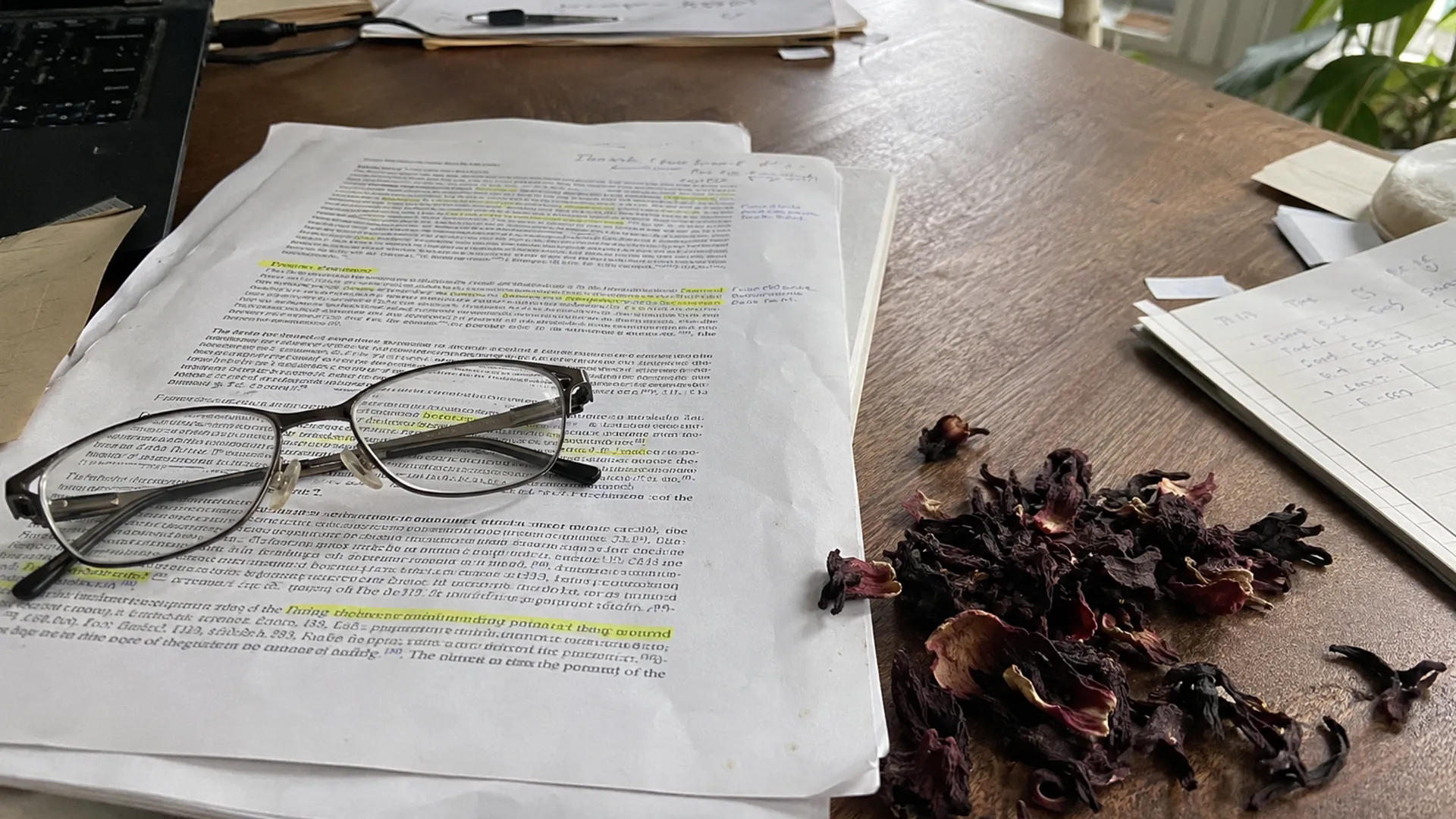
After 38 years in nursing, I thought I knew every option for kidney disease. Then my own kidneys started declining, my doctor told me to "just keep monitoring," and a patient told me something that made me question everything. What I discovered will save you hundreds of dollars, and it might be the reason you finally sleep through the night again.
In 38 years of nursing, I have developed an absolute skepticism toward anything marketed to kidney patients.
Kidney disease is one of the hardest things I see patients struggle with. The foamy urine. The burning when you pee. The swollen ankles that never go down. Patients tell me they're up 3 or 4 times every night running to the bathroom. Day and night, it never stops.
And because those patients are desperate, an entire industry sells them hope. Detox blends. Cleansing capsules. Kidney flushes. I have watched all of them take people's money while delivering nothing.
So when patients began asking me about hibiscus tea for kidney function, my advice was very simple: save your money.
That position might have remained unchanged if not for my own diagnosis three years ago.
Key Points
- • Most hibiscus teas fail due to poor processing and low-altitude growing
- • Only one brand met all five quality criteria with measurable results
- • Whole-flower, high-altitude hibiscus preserves the anthocyanins that support kidney filtration
- • Real-world testing showed significant improvements in kidney function and sleep
The Diagnosis I Never Expected to Be Mine

At 62 years old, I have stage 3 kidney disease. All those years of long shifts and not taking care of myself the way I should have finally caught up with me.
At first it was just feeling tired after lunch. Then came the swelling. Those sudden waves of exhaustion and brain fog that hit you out of nowhere. By the end of my shift, I could barely think straight.
But the worst part? Nighttime.
The second I'd finally fall asleep, I'd wake up needing to pee. Again. And again. I'd be dragging myself to the bathroom three, sometimes four times a night, feeling exhausted and thirsty no matter how much water I drank. I'd be up half the night trying to get back to sleep between bathroom trips.
Now I was the one living with it. And let me tell you, every patient was right. It's a living hell.
Before any intervention:
eGFR of 42 and falling, up 3-4 times nightly, foamy urine every morning, brain fog by mid-afternoon
One week with proper hibiscus:
eGFR of 54, sleeping through the night, steady energy through a full 12-hour shift
Eight hours. The first morning it happened, I just laid there, stunned. I had slept eight hours without waking up once. That hadn't happened since my diagnosis.
I don't exaggerate. These weren't subtle changes. And I'll show you exactly how I got there, including the two brands that didn't work.
The Appointment That Changed How I See My Own Profession
My doctor looked at my numbers and said, "Well, you're stage 3, but it's not critical yet. Let's just keep monitoring. Drink more water, cut your sodium.
That was it. Thirty-eight years of watching my patients decline, and his advice for me was drink more water.
I sat in that parking lot for ten minutes just staring at my steering wheel. I knew what stage 3 turns into. I've watched it happen hundreds of times. But apparently my numbers weren't bad enough for him to care yet.
I asked about other options. He mentioned dialysis as something we might consider "down the road." Like it was no big deal.
I've watched too many of my patients struggle with that process. The fistula surgery that takes months to heal. The three-times-a-week schedule that takes over your entire life. The fact that their kidney function still keeps declining. And for what? Most of them tell me it barely keeps them stable.
I wasn't about to trade one nightmare for another. And I wasn't about to just sit there and "monitor" while my kidneys got worse.
Because here's what I know after 38 years that most patients are never told: monitoring measures your decline. It does not stop it. Between blood draws, the damage keeps going. And the kidney function you lose does not come back.
What I Tried First
So I started looking into natural options.
Cranberry supplements.
Kidney support blends.
Cutting protein completely.
Nothing really worked, but what else was I supposed to do?
My sister found out I was spending money on supplements and told me I was "turning into one of those people." She said I should just listen to my doctor.
Easy for her to say. She's not the one waking up four times a night wondering if her kidneys are going to give out.
The Patient Who Knew Something My Doctor Didn't
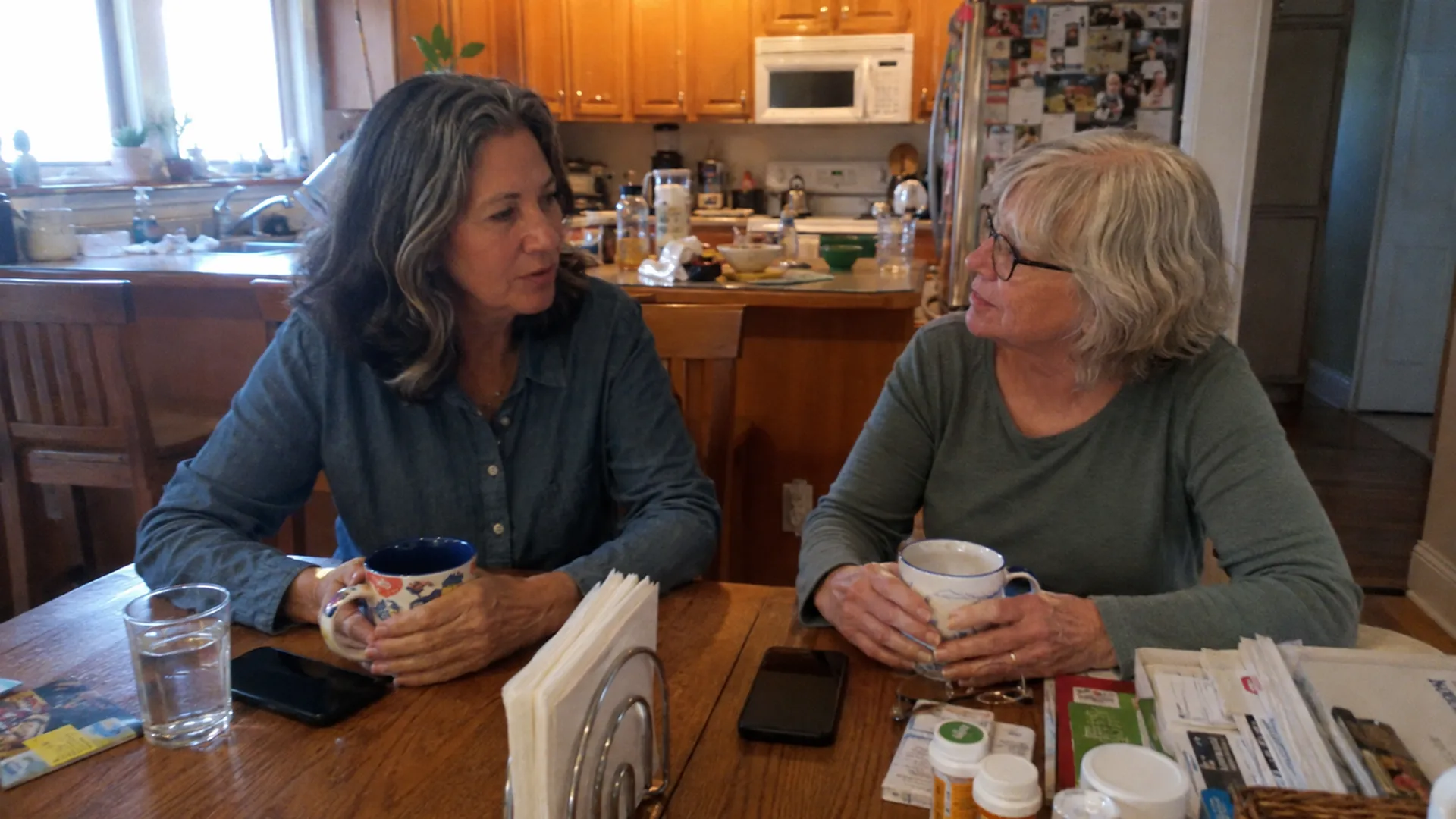
Back in May, one of my regular patients came in for her appointment.
Sweet lady with stage 3 kidney disease and declining function for years. She'd been struggling with it for over a decade. I always felt terrible for her because she'd tried everything, and nothing gave her more than a few points of stable eGFR.
But this time she seemed different. Lighter somehow.
I asked her how she was managing, and she said something I didn't expect. Her kidney function wasn't declining anymore.
She'd found a tea.
Hibiscus tea, with natural antioxidants. She'd been drinking it every morning. And for the first time in years, she was sleeping through the night without waking up to pee.
I'll be honest, I was very skeptical. I've heard every miracle cure story you can imagine. But she seemed so genuinely relieved. Like she'd finally found something that actually worked.
That same night, my kidneys were acting up again. I woke up twice to pee and couldn't get back to sleep. And I kept thinking about what she'd said.
So I pulled out my laptop and started digging. Because clearly nobody else was going to figure this out for me. Not my doctor with his "let's just monitor." Not a system that's been giving my patients the same useless advice for decades.
The Research My Doctor Never Mentioned
Here's what I found that night, and what made me angry.
First, the problem itself. Roughly 9 in 10 people with chronic kidney disease don't even know they have it. By age 60, the average person has already lost about 40% of their nephron reserve, the tiny filtering units your kidneys are born with. And once nephrons scar over and die, they do not grow back.
That's why "let's just keep monitoring" made me so angry.
The number on my lab report wasn't the disease. It was the scoreboard. Between every blood draw, oxidative stress and inflammation keep grinding away at the nephrons you have left, while everyone waits politely for the next test to confirm it.
Then, the hibiscus research. The antioxidants in hibiscus tea, anthocyanins, polyphenols, flavonoids, and organic acids, restore your kidney cells' ability to filter toxins properly. They reduce the oxidative and inflammatory burden on the nephrons you still have, and they support the blood vessels your kidneys depend on. It doesn't force your kidneys to work harder like treatments do. It reduces the daily load on them.
The science actually made sense. And it made me angry all over again, because this information isn't hard to find. Doctors just don't look for it.
But here's the detail that turned out to matter more than everything else: the studies showing real results used standardized, whole-flower hibiscus preparations with anthocyanin content measured in the hundreds of milligrams per cup.
The blended tea bags at the grocery store deliver about one-tenth of that.
I didn't know that yet. I was about to learn it the expensive way.
My Three-Brand Test
I ordered some. Figured I had nothing to lose. Worst case, it wouldn't work and I'd be out a few dollars.
Brand 1: Nile Rose Botanicals ($19, loose flower)
I made a cup that first morning. I didn't expect much. Just another thing to try.
After about a week, my eGFR improved a little. From 42 up to 45. Better. But not life-changing.
Brand 2: Scarlet Petal Organics ($12, tea bags)
So I ordered a different brand. This one was cheaper, and it came in tea bags instead of loose flower. After two weeks, my numbers stayed about the same. Maybe 46 in the mornings. Still too low.
I was getting frustrated. Everyone said hibiscus tea worked. But it wasn't working for me.
Back to the research
So I went back and started reading more carefully. That's when I noticed something.
People weren't just saying "hibiscus tea." They were getting specific about which hibiscus tea. One person said they tried three different brands before finding one that actually worked.
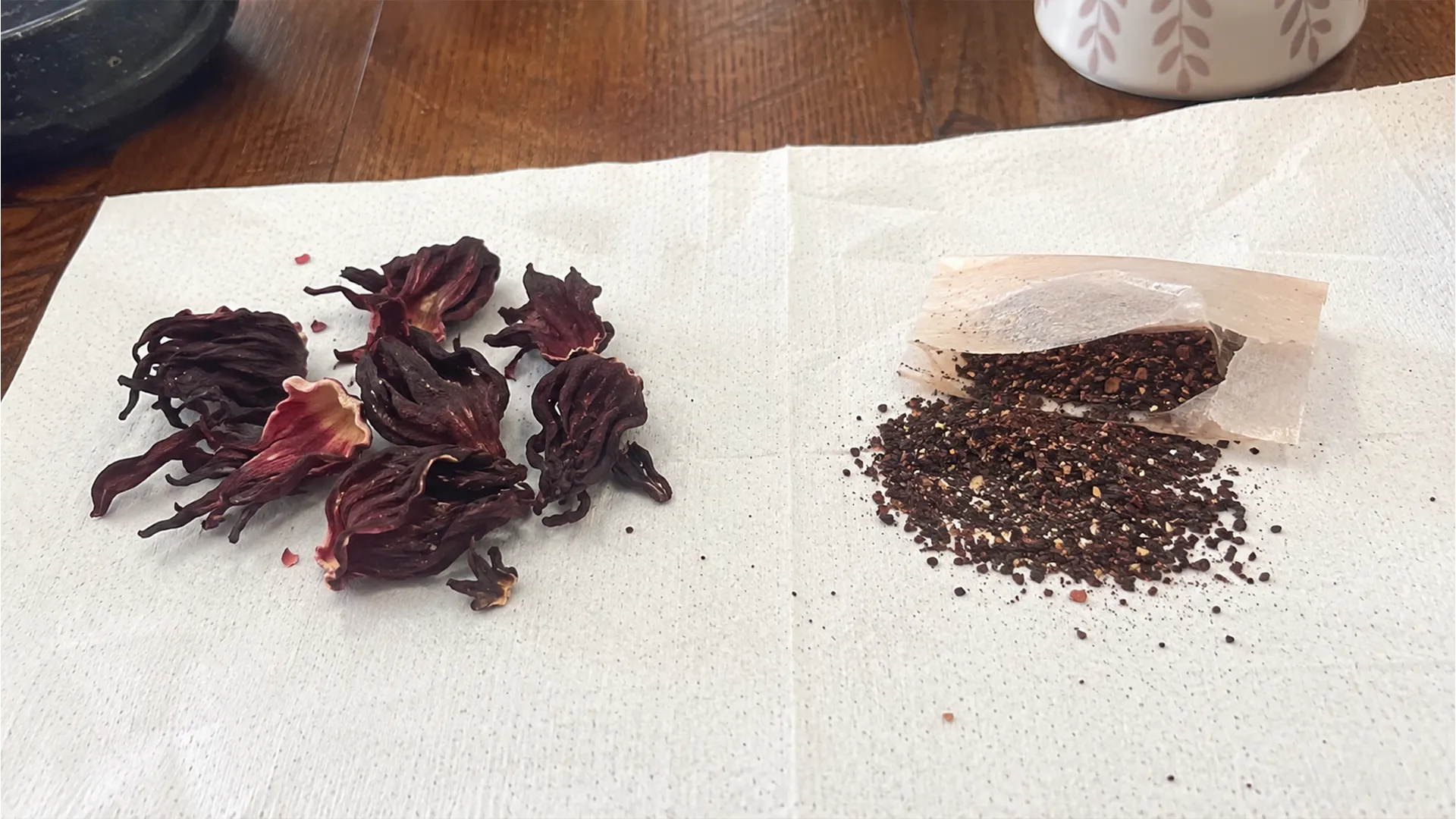
Another mentioned that most hibiscus tea you can buy online is "flower dust," the broken leftover scraps from processing that don't have any of the actual healing compounds.
We had been drinking the dust.
I started researching. Turns out, most hibiscus teas are:
Over-processed (which destroys the antioxidants)
Grown at low elevations (weaker potency)
Mixed with flower dust and fillers
Sprayed with pesticides
Machine-harvested (damages the flowers)
The hibiscus teas that actually worked for kidney function had to be:
Whole flower (not dust or broken pieces)
Grown above 4,500 feet (higher altitude = more potent antioxidants)
Hand-picked at peak harvest (preserves the anthocyanins and polyphenols)
Traditionally processed (protects the healing antioxidants)
Organic (no pesticides blocking absorption)
Suddenly my two failed brands made sense. The right ingredient in the wrong form is still the wrong solution.
I kept seeing the same brand mentioned over and over in the reviews and testimonials. The only one people said checked all five boxes.
PiPi Tea.
The Tea That Actually Looked Different
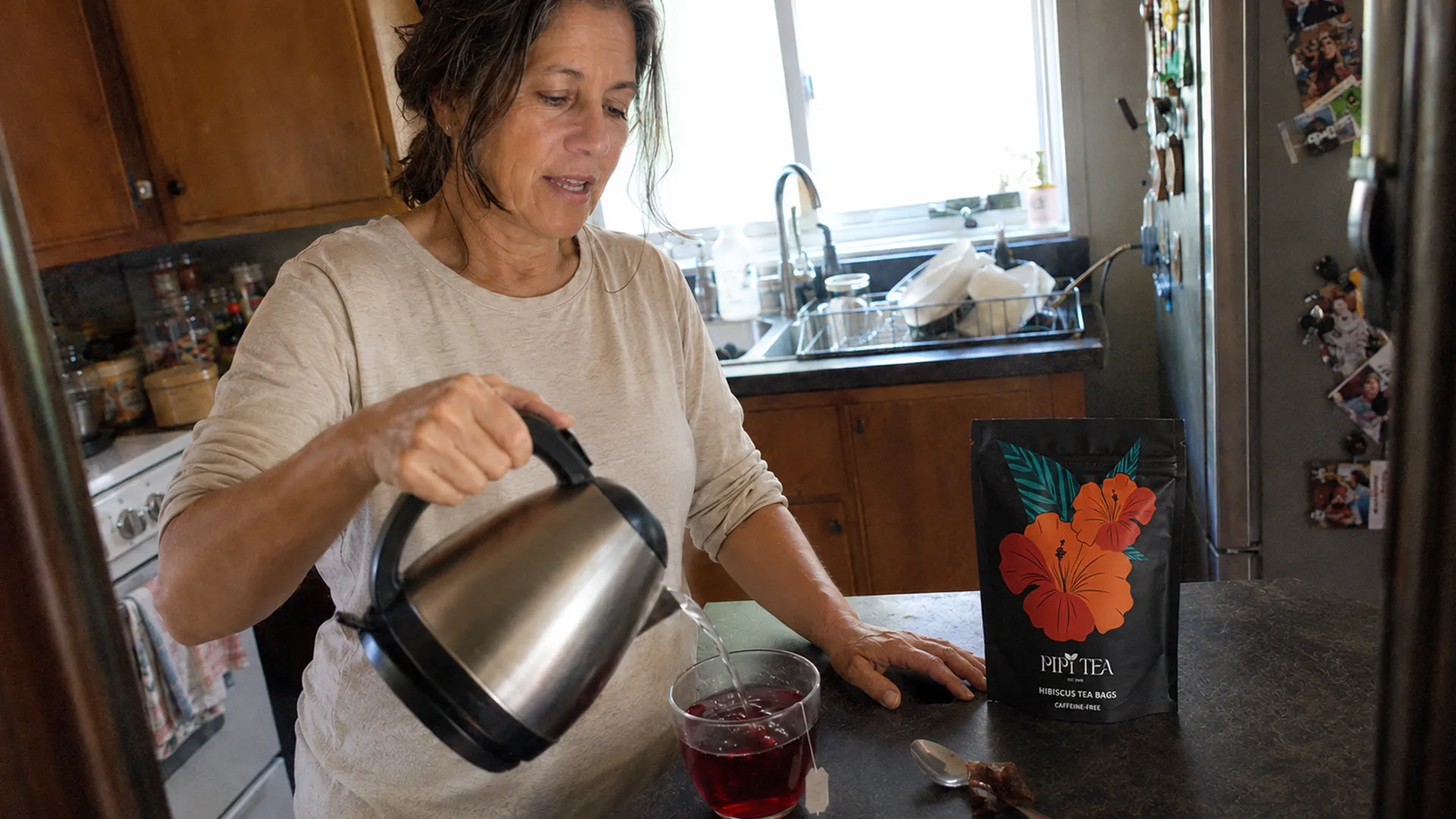
I ordered it. It was more expensive than the others I'd tried, but at that point I didn't care.
When it arrived, I could tell the difference immediately. The flowers were whole, deep red, and perfectly dried. The smell was different. Richer, almost sweet. When I steeped it, the color was deeper.
I made a cup that first morning. One tablespoon, hot water, steeped for eight minutes. I didn't expect much. I'd already tried two other brands.
But about 30 minutes later, I noticed something. The usual mid-morning fatigue wasn't happening. Like someone had flipped a switch and my energy was actually staying steady. I went from feeling like I was dragging through the day to feeling clear-headed and energized. I could actually feel my brain working properly again for the first time in months.
That night, I slept through.
Actually slept through, without a single bathroom trip. No waking up at 2 AM. No stumbling to the bathroom half-asleep. Just sleep.
When I woke up the next morning, I laid there stunned. Eight hours. I'd slept eight hours without waking up once.
By the end of the first week, I checked my eGFR at work. 54.
Not 46 like with the other brands. 54. I checked it three times because I didn't believe it. It hadn't been over 50 in over a year.
That foamy urine that used to scare me every morning? Gone. The burning that made me dread going to the bathroom? Cleared up almost completely. I could work a full shift without feeling like I needed a nap by 2 PM.
Two Months Later
It's been two months now. I sleep through the night. Every night. The foaming is gone. The burning is gone. Sometimes I get a tiny bit of fatigue after a really long shift, but it's nothing compared to what it was.
Last week I checked my numbers again. My eGFR is 58. In May it was 42.
And the strangest part of this whole story happened in my doctor's office.
The Doctor Who Told Me to "Just Monitor"
I went back to my doctor last week. Same doctor who told me to drink water and keep monitoring.
He pulled up my chart, looked at my numbers, and actually paused. Then he said, "Sandra, whatever you changed, your function has improved significantly. This is not what I expected to see."
I just smiled. I didn't tell him what I was taking. I didn't need to. I just needed to hear him say what I already knew. I was right to keep looking.
Where I Got Mine
What Happened When I Told My Patients
I saw my patient last week and thanked her. She just smiled and said she was glad it helped.
Since then, I've told five of my patients with kidney disease about PiPi Tea specifically. Every single one of them has come back and told me their function is improving.
"After more than ten years of watching my numbers slide, they've finally stopped moving in the wrong direction. And I sleep through the night now. That alone changed my life."
Verified
"I slept through the night for the first time in three years. I cried when I told my husband."
Verified
"My doctor asked me what I'd changed. I told him nothing, same as Sandra did. My numbers hadn't moved in the right direction in four years until now."
Verified
And my sister? The one who said I was "turning into one of those people"?
She called me last week. Said she could tell something was different about me. I looked healthier, I had more energy, I wasn't complaining about being tired all the time. She asked me what I was doing. I told her about PiPi Tea.
She ordered a bag that same night.
The Question Every Patient Asks Me

Whenever I recommend it, the first question is always the same: "Is it safe to take with everything else I'm on?"
Here's exactly what I tell my patients, as a nurse and as a stage 3 patient myself.
I kept every prescription exactly as my doctor wrote it. I changed nothing else about my routine. The tea was an addition. One cup, every morning, alongside everything I was already doing.
This is a flower steeped in hot water. The same hibiscus has been consumed as a daily tea in Egypt, Sudan, and Mexico for centuries. Not a drug. Not a detox protocol. Not another restriction added to an already impossible diet list.
And that's the part my patients love most. No pill organizer. No food rules. No schedule to build your life around.
One tablespoon. Hot water. Eight minutes. One cup a day.
That's the entire routine. It takes less time than sorting a week's worth of pills.
Of course, I tell every patient the same thing I'll tell you: keep your doctor, keep your blood draws, and never stop a prescribed treatment on your own. The tea's job is different. It gives you something to do for your kidneys between appointments, on all the days when nobody is measuring anything.
My Professional Verdict
After three months of testing on the most skeptical patient I know, myself, here's the truth:
• Hibiscus for kidney support is scientifically legitimate. The research is real, and the results are measurable.
• Most hibiscus teas can't deliver it. Flower dust, low-altitude growing, and industrial processing strip out the anthocyanins before the tea ever reaches your cup.
• The right ingredient in the wrong form is still the wrong solution. That's why so many people say "I tried hibiscus and nothing happened."
• Only ONE brand I found meets all five criteria: whole flower, hand-picked at peak harvest, grown above 4,500 feet, traditionally processed, organic.
• And the belief that almost cost me everything: monitoring is not protection. The nephrons you lose while you "wait and see" do not come back.
About the Offer
When I went back to order more, I found out why people kept warning me about availability.
PiPi Tea is a small, family-run company. They hand-pick at peak harvest, which means they can't just scale up production when demand spikes. And demand keeps spiking, probably because nurses like me keep telling patients about it.
They're currently running a reader promotion:
Regular price: $65.99
Investigation reader price: $34.98
Valid for: 72 hours after publication
Available inventory: approximately 280 packages until the next harvest
Every order is covered by a 90-day money-back guarantee. If it doesn't work for you, you get your money back. No questions asked.
I'll be honest about the downside: they sell out. I've had patients wait months for it to come back in stock. If the button below shows sold out, that's why. But I'd still check.
My Personal Investment
At 62, with 38 years of nursing behind me, I've learned to be careful about what I put my name on.
I just ordered three more bags. Nobody paid me to write this, and nobody sent me free tea. I paid full price for every brand I tested, including the two that didn't work.
I keep ordering it for one reason: my numbers. An eGFR of 42 in May. An eGFR of 58 today. My sleep is back. My energy is back. My mornings don't start with fear anymore.
My kidneys don't lie.
A Final Thought
For almost three years I thought I just had to live with the declining function and the symptoms. That this was my life now. That I should "monitor" it and accept it.
But I was wrong. And so was everyone who told me to stop looking for an answer.
I'm sharing this because I hope it can help someone else the way it helped me. After 38 years as a nurse, I thought I knew every option out there.
Turns out, my patient knew something my doctor didn't.
Every bag comes with brewing instructions. Follow them exactly. The eight minutes matter.
P.S.
A few things I wish I'd known before ordering. When I first ordered PiPi Tea, I didn't know about the 90-day money-back guarantee. If it doesn't work for you, you get your money back, no questions asked. I wish I'd known that earlier. It would have saved me from spending weeks on the cheaper brands that didn't do anything.
If you're dealing with declining kidney function, constant fatigue, brain fog, or waking up multiple times a night, and especially if your doctor has told you to "just monitor" while you keep getting worse, I'd grab some before they're gone again. I went from an eGFR of 42 to 58 in under three months. My doctor didn't believe it. My sister didn't believe it. But my kidneys don't lie.
P.P.S.
If you already have hibiscus tea in your cupboard, do one thing for me. Cut open a tea bag and look at what's inside. That powder is what's left over after the whole flowers are processed, and it's the reason your numbers never moved. Hibiscus didn't fail you. The form failed you.